Sunday, 15 December 2013

London Street Style

Whilst walking through London it is always packed full of fashionistas young and old. Here are a few people I noticed walking around who possessed something a bit different from the normal.

South Kensington individuality

Oxford Street Day casual 

Oxford Street Day smart

Oxford Street Day tiger

Oxford Street Day homeless chic

Oxford Street Night Monochrome

Oxford Street Night Net Detail

Oxford Street Night Morrissey inspired

Oxford Street Night Comfort

Oxford Street Night Wavey Fur

Oxford Street Night Rocker (man on left not right)

Oxford Street Night Russian Essence

Oxford Street Night Sheepskin warmth

'100 years of fashion'


100 years of fashion by Cally Blackman documents in pictures the most exciting and diverse period of fashion; from 1900 to today, covering high society, uniforms, sportswear, street wear and couture. The last 100 years of fashion bore witness to a huge transformation. The restricted corsetry of the early twentieth century gave way to looser styles such as those made fashionable by french fashion designer Paul Poiret. As women's lives changed dramatically under the shadow of 2 World Wars, so the style of female dress was altered beyond recognition. From home dressmaking to couture, from rationing to 'The New Look,' from the birth of the teenager to mass manufacture, from high society to celebrity culture. 


The book itself includes over 400 photographs and illustrations, many published for the first time, which tell the story of a fashion revolution. 

'Club to Catwalk- Fashion in the 1980's'

Whilst in London I had the chance to visit the V and A's new exhibition 'Club to Catwalk- Fashion in the 1980's'. This exhibition almost seemed to follow on from the previously sold out exhibition 'David Bowie Is' and took a trip into the past club scene within Britain during the 1980s looking into all different types of sub cultures. I thoroughly enjoyed it as it was obvious where trends from today had been adapted from.

The exhibition itself explored the creative explosion of London fashion and the newly established London Fashion Week. London's unique fashion identity in the 80's was a result of the fusion between club and catwalk. Risk taking young fashion makers behind that new style remain some of the most influential figures in fashion today.

"Fashion is important, it raises the quality of life when people take the trouble to dress well it provides employment" Margaret Thatcher.


The 80's was an era that is defined by such vibrant style icons as David Bowie, Adam Ant and Boy George, following on from the 70's punk era it gave way to a new explosion of rave culture. In the early 80's London fashion stirred internationally, "young London was all about taking risks and creating something out of nothing through passion and ambition" said London based fashion designer Georgina Godley who lived through the fashion of the 1980's. Most well known designers of the time caused controversy with their clothes and followed either tradition or subversion, creating a stylish informality of flamboyance. Style of the time was very androgynous and was described as femininity on Saville Row. 

80's brought to light fabric explosions and evening wear counter-parted to street and club. Betty Jackson introduced colourful wild prints, huge shoulder pads, a mixture of patterns and an androgynous vibe. 

Knitwear in the 80's was diverse with vintage inspired hand knits, machine knits, sleek body hugging knits and deconstructed punk knits.


The 80's also introduced the New Romantic scene made famous from Blitz Club London, the look was androgynous dripping with diamonds. the Punk era of the 70's was hugely influential for the look of the 80's, designers and clubbers started to customise their clothes, combining different styles. Milliner Stephen Jones states that "fashion was their to express yourself".


The Rave scene started to come alight with ecstasy fuelled rave clubs, the aesthetic of early clubs had been replaced by sweat clubs showing fashions of day glo colours and metallic tones portraying a sports aesthetic. Voluminous shapes were replaced with figure hugging stretchable fibres. "Stretch is fashions dynamic force, a challenge for a designers and wearer alike" Vogue 1987.


Goth emerged from a combination of punk fetish and an 80's obsession with dressing up, black lace, leather, deathly makeup and hugely backcombed dyed hair.

Adventures in London

London is one of the worlds most fashionable and cultural cities over flowing with life. My course offered a trip to travel down for a day and optionally to stay over night till the next day, with it only being a few hours a way I regularly travel down to visit my best friend (who lives in Epsom). I enjoyed the trip and wandered around aimlessly getting lost for a good hour or so with friends, our plan for the day though was to attend the V&A exhibition called Club to Catwalk- Fashion in the 1980's, take some street style photos and conduct market research for our brands. 


Article Analysis

The concept of analysing an article means that we as fashion communicators can establish where it has come from and what purpose it has been written for. Within a recent seminar we were given 3 separate articles, to which we didn't know the purpose or where it came from,  to closely analyse in pairs and to make an estimate as to where it's from. When looking at the first article we were given some steps to consider,
. What are the main points being made?
. Key themes? Issues? What questions are addressed? 
. Who is it aimed at?
. What was it originally published for?
. What do you think about it?
. What research methods do you think they have used?

Article 1

The first article I looked at was titled 'Fast Love', the title itself is misleading as it doesn't give the articles context away, with a tagline rhetorical question 'How often do you have a 9am meeting or go to the gym before work and need your hair and makeup done?'


After glancing over it quickly I then read through it thoroughly and looked into the questions
. The main points being made are that a new fast beauty salon for influential women is opening, women with a business lifestyle
. Themes include what women need, groomed, glamorous, fast beauty, "what women don't have enough of? Time"
. It is aimed at business women, late 20's upwards, mid 40's
. I believe it was originally published for a style magazine, more specifically the beauty section, free press
. I personally think that the idea within the magazine is stupid but that is just because it isn't aimed at me I can appreciate how it would be helpful for business women though
. Within the article they use both secondary and primary research


Article 2

The second article I looked at didn't have an obvious name and had an awkward layout straight off the bat (being double sided and upside down).


. The main point being made are that the magazine industry is dying out and that the older grey market hash't got an appetite for magazines.
. Themes include print vs digital, the grey market and magazines
. Due to the formal language used and it's content I believe this extract to be aimed at an older market, possibly 30+
. I thought it was published for a journal but later found out that it was actually a 3rd year Fashion Communication and Promotion report piece.
. I thoroughly enjoyed this extract as it was insightful and delved into an issue that no one else had thought of looking at
. Both primary and secondary research have been used to justify the argument brought forward


Article 3
The 3rd and final article I had already seen and had in my room at home. All that was shown to us was a page of writing.


. The main points being made are depicting new and upcoming talent in all artistic formats i.e fashion and music
.  Key themes include style, music, travel, models, individuality and collaborations
. It is aimed at a younger market due to its informality and playfulness with use of coinage and consumers of Topshop
. It was originally published as part of a recent Topshop zine, I know this because I have the original zine and also because of its colloquial language, informality and how it's not too wordy.
. I like this extract I think it could be a bit more interesting visually
. The extract is like a well worded contents page so I wont know if secondary or primary research is used until you open it


Celine Brand Analysis

Celine was established by Parisian Celine Vipiana in 1945 as a children's shoe wear company, as an immediate success this pushed her into the women's clothing and accessories industry. 

Post war 1950's Celine had predicted a high desire for luxury goods and created her own range of luxury goods items. After a huge success the label launched a line of ladies clothing. By the late 1950s there were lines of Celine handbags and Celine shoes for women, The popularity of these items brought new clientele and represented an elegant turning point for the business


From the 1960's Celine had nothing to do but rise, providing popular lines of handbags, shoes and clothes which incorporated a new middle class market as well as the elite. During the 1970's Celine was known as an international luxury brand with stores situated all over the world. 


Vipiana believed that modern women did not need whimsical outfits, they needed chic clothes. The designer style of the brand was based around separates, the looks they created caught the imagination of modern women hungry for freedom and change. Celine collections were easy to wear and fundamentally Parisian yet global.


“Women grasped the idea immediately. They realized that Celine fashion was practical and easy care. The woman who travels can take lightweight things in one suitcase and remain neat and impeccable. For example wearing a skirt and blouse, which I made famous, was not in fashion”. In 2008 Phoebe Philo, the Paris born London based designer was appointed creative director of CĂ©line. After graduating from Central Saint Martin’s in 1996 Philo went to work at Chloe with her friend Stella McCartney, becoming creative director of the label in 2001. In 2005 she was named British Designer of the Year and left Chloe in 2006 to spend more time with her family. In 2010 Philo was again named British Designer of the Year.


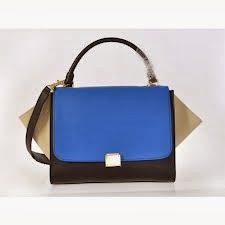
Celine as a brand doesn't use a lot of colour in an obvious way. The brand itself is a huge fan of colour blocking the process of putting colours that normally wouldn't go next to each other together. It has a colour palette of black, white, nautral and earth tones with a splash of colour.


Celine also uses pattern and has established it's very own 'Celine Check'. The main way in which Celine presents its elegance is through use of texture, the brand uses a lot of leather, silks and wools. 


Celines most famous and iconic product is the 'Celine bag' worn by celebrities all over the world. It is most famous due to its chic, elegant look and through Celines use of fabric and texture incorporated into their bags.